Epoxy Garage Floor Coating in Springfield, IL
If you are looking for an epoxy garage floor in Springfield, IL, you have probably already seen what a Central Illinois winter does to bare concrete. Salt brine drips off the car all winter, the slab freezes and thaws for months, and by spring the floor is pitted, stained, and dusty no matter how often you sweep it. We coat garage floors for a living, and Springfield is one of the places we know best — the state capital, Lincoln’s hometown, a Route 66 town, and a city full of garages that work hard. State workers commuting up I-55 and I-72, families parking by Lake Springfield, older homes with slabs that have been through fifty winters: we have seen all of it, and we know what holds up here.
ProLine Concrete Coatings is based in Mattoon, IL, and we travel to Springfield and the surrounding Sangamon County area to install our polyurea and polyaspartic flake floor systems. We are not a franchise and we do not have a Springfield office — our crew comes from Mattoon, does the job, and cleans up before we leave. Most two- and three-car garages are finished in a single day. Every system we install carries a 5-year warranty. And every job starts the same way: a free quote, with a firm price for your floor before we touch it.
Call 217-460-1908 or get your free quote — it takes a couple of minutes, and there is no obligation.
Why Springfield Garages Take a Beating
Springfield’s climate is the first problem. Winter here is long and real. January lows average around 18°F, and the temperature drops below freezing on roughly 116 days a year. Snowfall runs about 18 to 20 inches a season — not the heaviest in Illinois, but more than enough when every storm brings another round of road salt. Bare concrete is porous. Meltwater and salty slush soak into the surface, freeze overnight, and expand. Do that a few hundred times over a few winters and the top of the slab starts to pop and flake off. That is called spalling, and once it starts, paint and hardware-store coatings do not stop it. They peel off with the concrete underneath them.
Road salt is the second problem, and it is worse than most people think. The city and the state salt I-55, I-72, Stevenson Drive, MacArthur Boulevard, and the rest of the main routes hard every winter. Your car carries that brine home in the wheel wells and undercarriage, and it drips onto the floor every time you park. Salt eats bare concrete from the surface down, leaves white crusty stains, and turns a smooth slab rough and dusty. A sealed, coated floor does not absorb any of it — the salt sits on top of the coating, and you hose or mop it off in the spring.
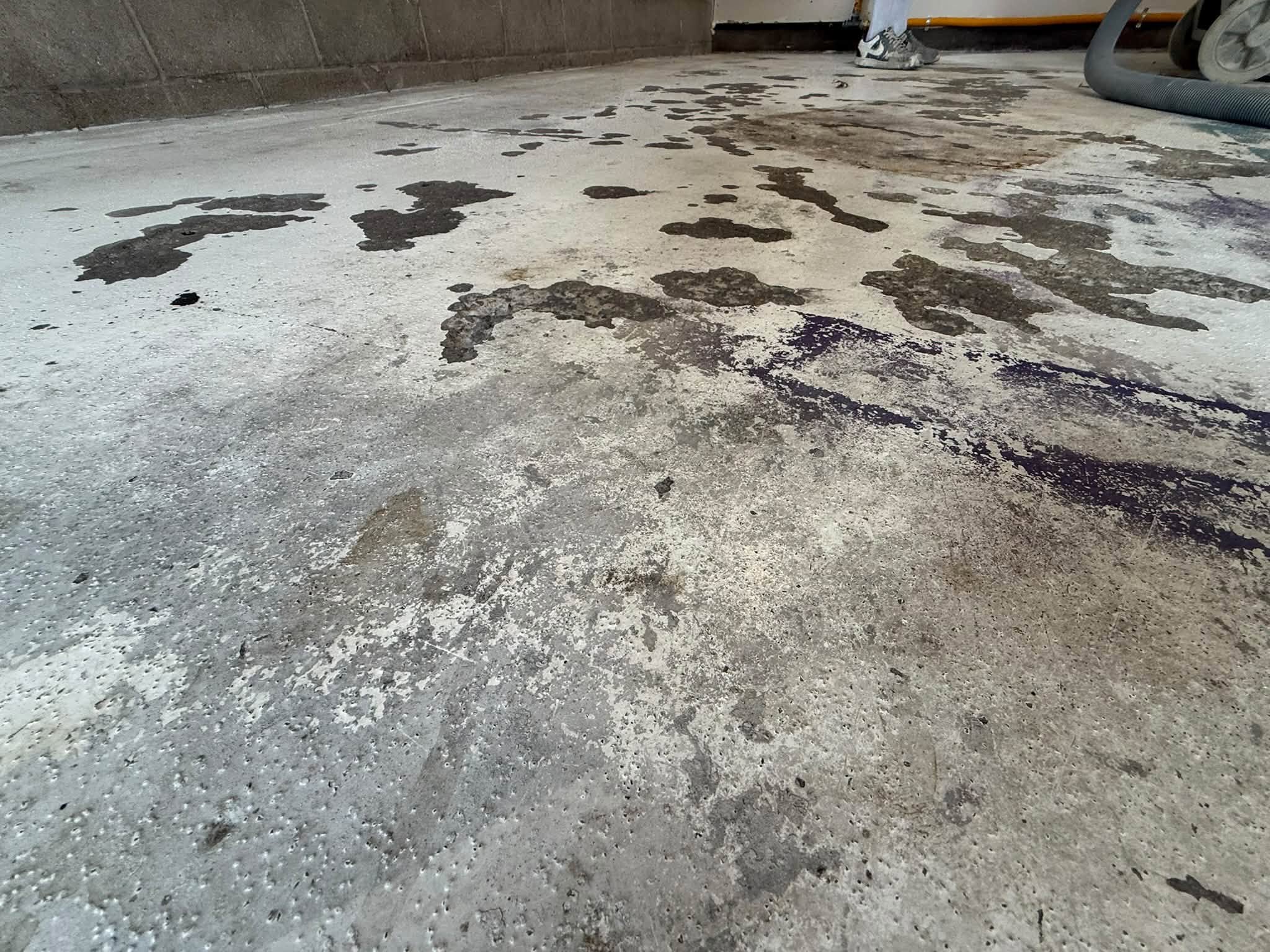
The third problem is the age of the floors themselves. The median home in Springfield was built in 1972, and about two-thirds of the city’s homes went up before 1980. A third of them date to before 1960. That means most Springfield garage slabs are fifty-plus years old, and they carry fifty-plus years of history: oil stains, tire marks, cracks from settling, pitting where the surface has worn thin, and at least one coat of paint or sealer that is now peeling. Older neighborhoods like Historic Iles Park, Leland Grove, Washington Park, and the West Side have some of the oldest slabs in the city, and they are also some of the most satisfying floors to fix — the difference between a tired, dusty slab and a finished flake floor is dramatic. Newer homes on the edges of town have younger slabs, but even a ten-year-old bare floor stains, dusts, and shows every tire mark. Age is not the only factor. Use is.
There is one more Springfield condition worth being straight about: parts of the city sit over old underground coal workings. The Illinois State Geological Survey maps abandoned mines under Springfield, and Sangamon County sees a handful of mine subsidence events in a typical year. A floor coating is not a structural repair. If a slab is moving because the ground underneath it is shifting, no coating in the world will hold it still, and our 5-year warranty does not cover structural cracking or concrete movement — the same as every honest warranty in this business. What we do is inspect the slab first, during the diamond grinding step, and tell you plainly what we find. If the cracks are normal shrinkage and settling, we repair them and coat over them. If something looks structural, we will say so before you spend a dollar.
What We Install: A Polyurea and Polyaspartic Flake System
Most people search for “epoxy garage floor,” and that is fair — epoxy is the word everyone knows. But the system we install in Springfield is not a standard epoxy. It is a polyurea base coat with decorative vinyl flake, sealed under a polyaspartic top coat. There is a reason for that, and it matters more in Springfield than in most places.
Standard epoxy has three weaknesses that show up fast in Central Illinois. It cures slowly, so a job can take days. It struggles in cold and damp conditions, which describes a Springfield garage for half the year. And it can yellow and peel when it is exposed to sunlight and freeze-thaw cycles. Polyurea fixes all three. It bonds to diamond-ground concrete far more aggressively than epoxy, it flexes instead of cracking when the slab moves with temperature swings, and it cures fast — even in cold weather. That is why we can coat garages through the winter and finish most jobs in a single day. The polyaspartic top coat is the armor: it is UV-stable so it will not yellow, it resists oil, gas, brake fluid, and road salt, and it stands up to hot tires, dropped tools, and daily traffic without scuffing through.
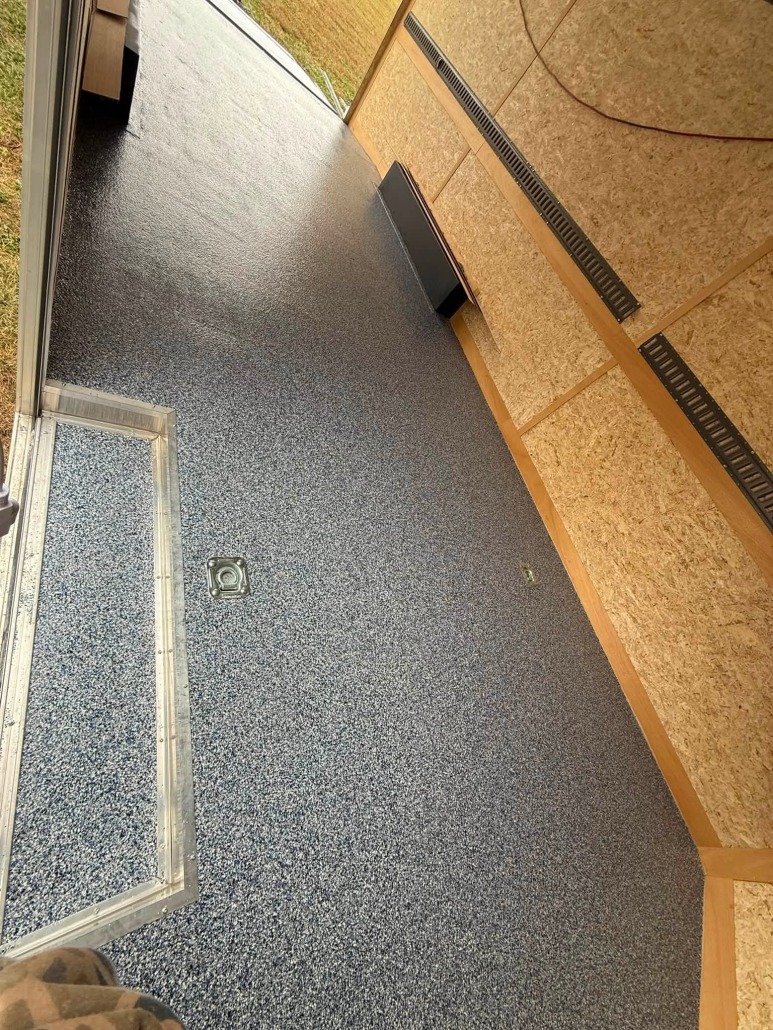
The flake is the part you see. We broadcast premium vinyl flakes into the wet base coat, and you choose the look. ProLine offers 177 flake blends in three flake sizes — 1/4 inch, 1/8 inch, and 1/16 inch — so the floor can be bold or subtle, light or dark, warm or cool. The flake does more than look good. It hides dust and dirt between cleanings, adds a little texture underfoot, and breaks up the flat, industrial look of a solid-color floor. If you like the look of your concrete and just want it protected, our grind-and-clear option mechanically grinds the slab and seals it with a clear coating instead. And if you want a clean solid color without flake, we can do that too.
Every system we install gets the same preparation, because preparation is what makes a floor last. There is no shortcut version. A coating is only as good as the surface it is bonded to, and that is the step most cheap jobs skip.
Our 7-Step Process in Springfield
Here is how a Springfield garage floor gets done, start to finish. The full process is described in detail on our main garage floor coatings page — this is the condensed version.
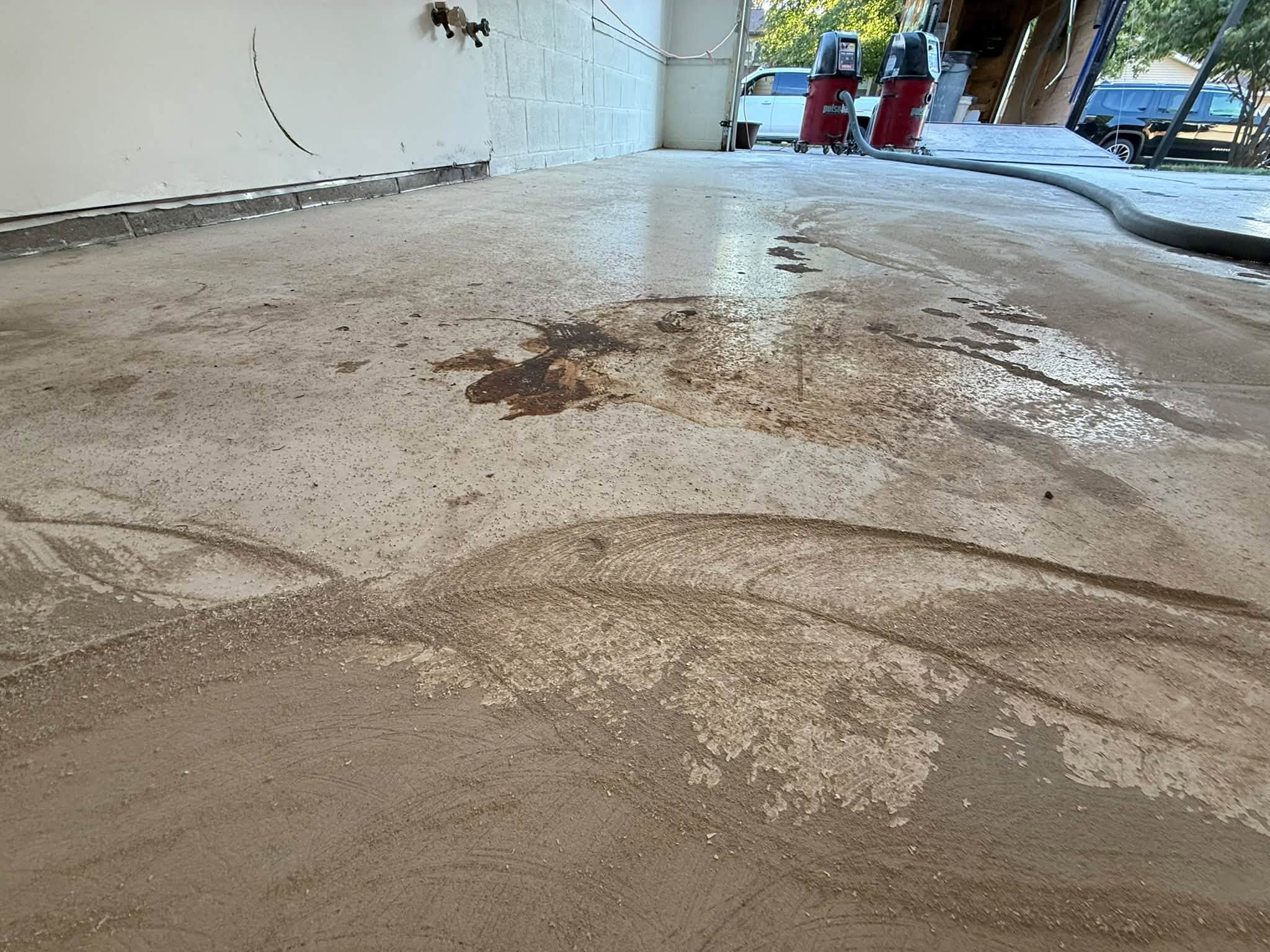
- Diamond grinding and surface preparation. We grind the slab with professional diamond grinders. This removes the thin, weak top layer of concrete, opens the pores, and gets rid of contaminants, old paint, and sealers. Grinding is also when we find out what shape the slab is really in.
- Crack and pitting repair. After grinding, we inspect the whole floor and repair cracks, pits, and imperfections with proper patching materials. This is the step that separates a floor that lasts from one that fails in a year.
- Thorough vacuuming. The entire surface is vacuumed clean of dust and loose debris so the base coat can bond directly to the concrete — not to a layer of dust sitting on top of it.
- Polyurea base coat. We apply the polyurea base coat, which bonds with the prepared concrete and forms the foundation of the system.
- Decorative vinyl flake broadcast. While the base coat is still wet, we broadcast your chosen flake blend across the floor, edge to edge. You pick from our 177 blends or build a custom mix.
- Polyaspartic top coat. The top coat seals the flakes in and creates the tough, protective surface — resistant to wear, stains, chemicals, and UV, and easy to clean.
- Grind-and-clear option. If you chose the clear system instead of flake, this is where the clear protective coating goes on over the ground concrete.
Most two- and three-car garages are done in one day. You can usually walk on the floor within hours, and in most cases you can drive on it the next day. We will confirm the exact timing for your floor before we leave.
How Much Does an Epoxy Garage Floor Cost in Springfield, IL?
Our pricing is straightforward, and it is the same pricing we charge everywhere in Illinois. A full flake system runs $5.75 to $7 per square foot. The grind-and-clear option runs $5 to $5.50 per square foot. A $2,500 minimum project charge applies.
Here is what that works out to for typical Springfield garages:
- Two-car garage (about 400 to 480 square feet): a flake system runs roughly $2,300 to $3,360. Grind and clear runs roughly $2,000 to $2,640.
- Three-car garage (about 600 to 720 square feet): a flake system runs roughly $3,450 to $5,040. Grind and clear runs roughly $3,000 to $3,960.
A few things move the price within that range. Slab condition is the biggest one — a floor with heavy cracking and pitting needs more repair work than a clean slab. Size matters, obviously. Flake size and blend do not change the price much, but custom work and extra features can. The only way to get an exact number for your floor is a free quote: we look at the slab, measure it, and give you a firm price. No guessing, no range that doubles after we start.
For comparison, most homeowners searching for epoxy garage floor cost in Springfield will find national averages and cost-guide websites quoting a wide spread, often with numbers that have nothing to do with Central Illinois. Our price is a real, local, installed price — preparation, repair, materials, and labor included — from a crew that does this every day.
Our Flake System
The best part of the job, for most homeowners, is choosing the floor. We have 177 flake blends, and you can see every one of them on our Flake System page, where you can mix your own custom blend and send it to us for a quote.
A few blends that look right in Springfield homes:
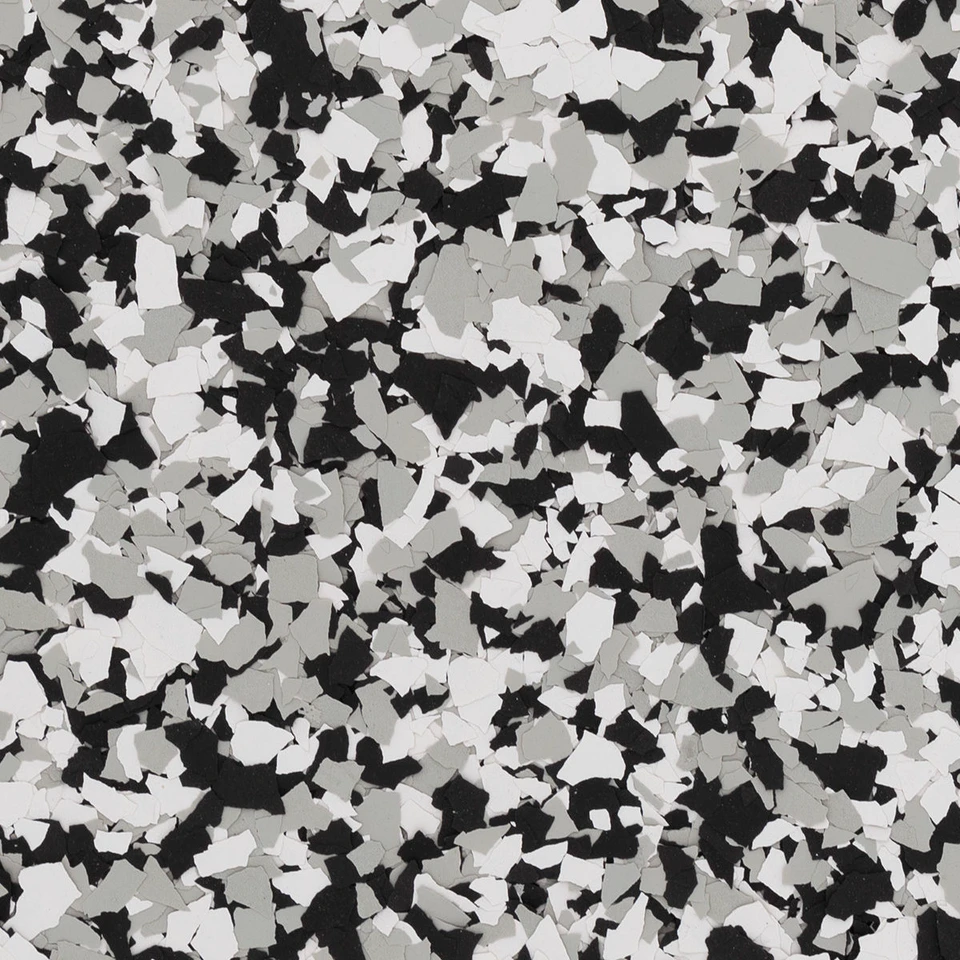
- Domino — black, granite, and white. The classic. Clean, high-contrast, and it hides dust better than any light floor. The most popular blend we install.
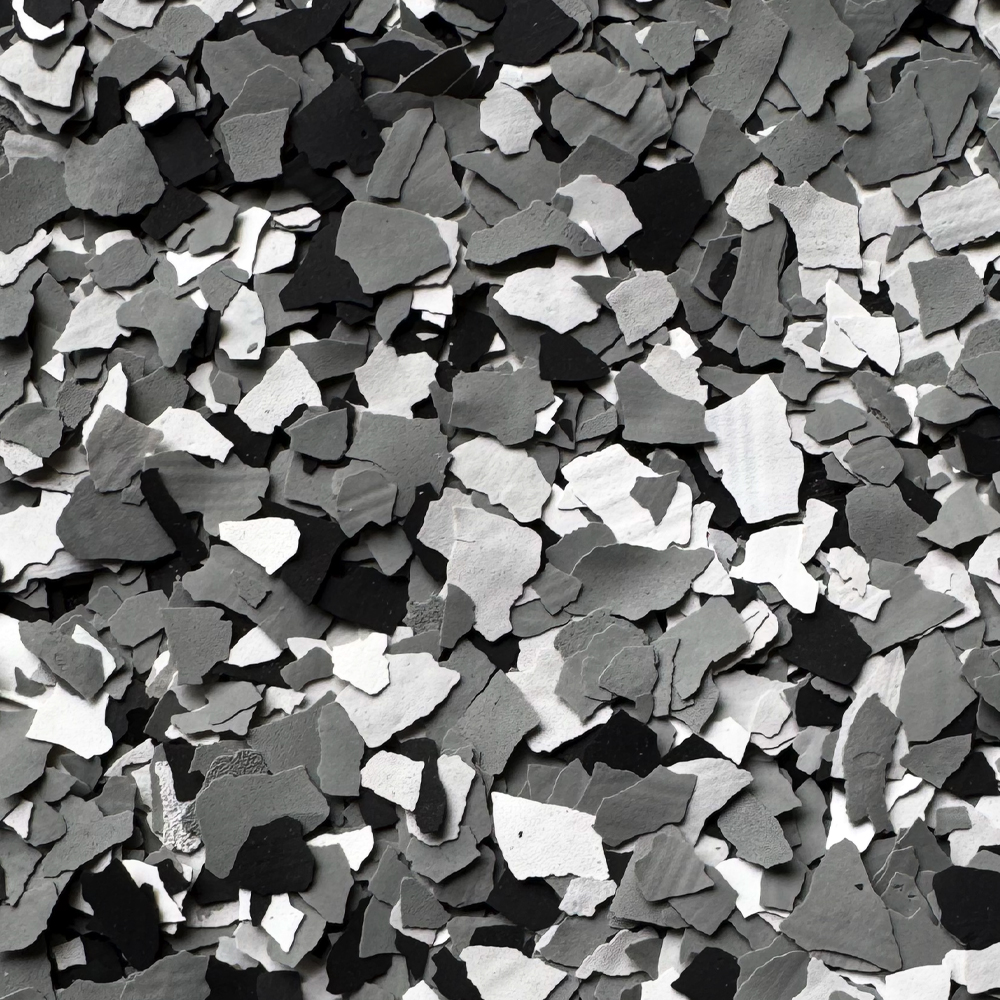
- Smoke — charcoal and gray tones. Quiet, modern, and forgiving. A good match for gray cabinets, workbenches, and newer homes.
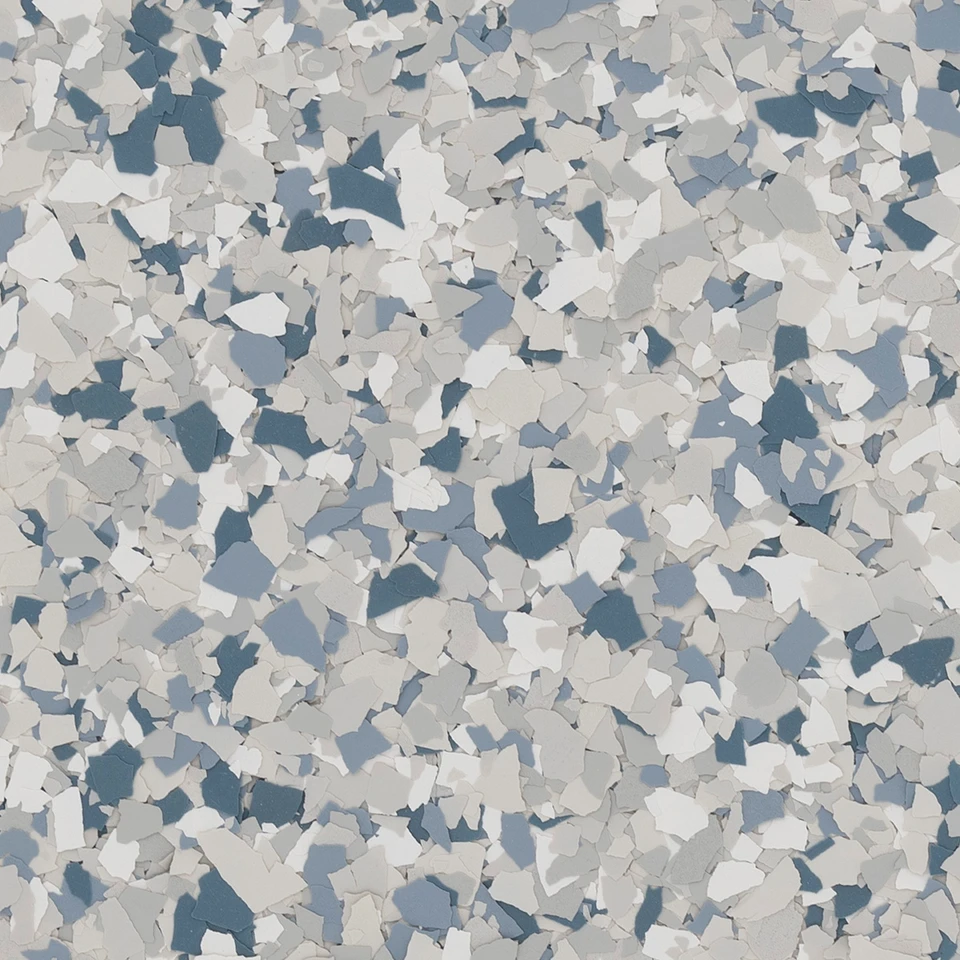
- Tidal Wave — blues and whites with a little stormy depth. A nod to Lake Springfield, and a floor that makes a garage feel bigger and brighter.
Flake size changes the feel as much as the color does. The 1/4-inch flake is the boldest and most traditional. The 1/8-inch is a finer, more refined look. The 1/16-inch is the subtlest — almost a solid color with depth. All three are the same system and the same price. If you are not sure, we bring samples, and you can try finishes on a photo of your own floor with the Floor Visualizer on our main garage floor page.
Domino
Smoke
Tidal Wave
Areas We Serve Near Springfield, IL
We coat garage floors throughout Springfield — downtown, the West Side, Washington Park, Leland Grove, Historic Iles Park, the Lake Springfield area, Jerome, and the south side — and in the towns around it: Chatham, Rochester, Sherman, Riverton, Pleasant Plains, Auburn, Pawnee, New Berlin, Athens, Williamsville, Divernon, Grandview, and Southern View.
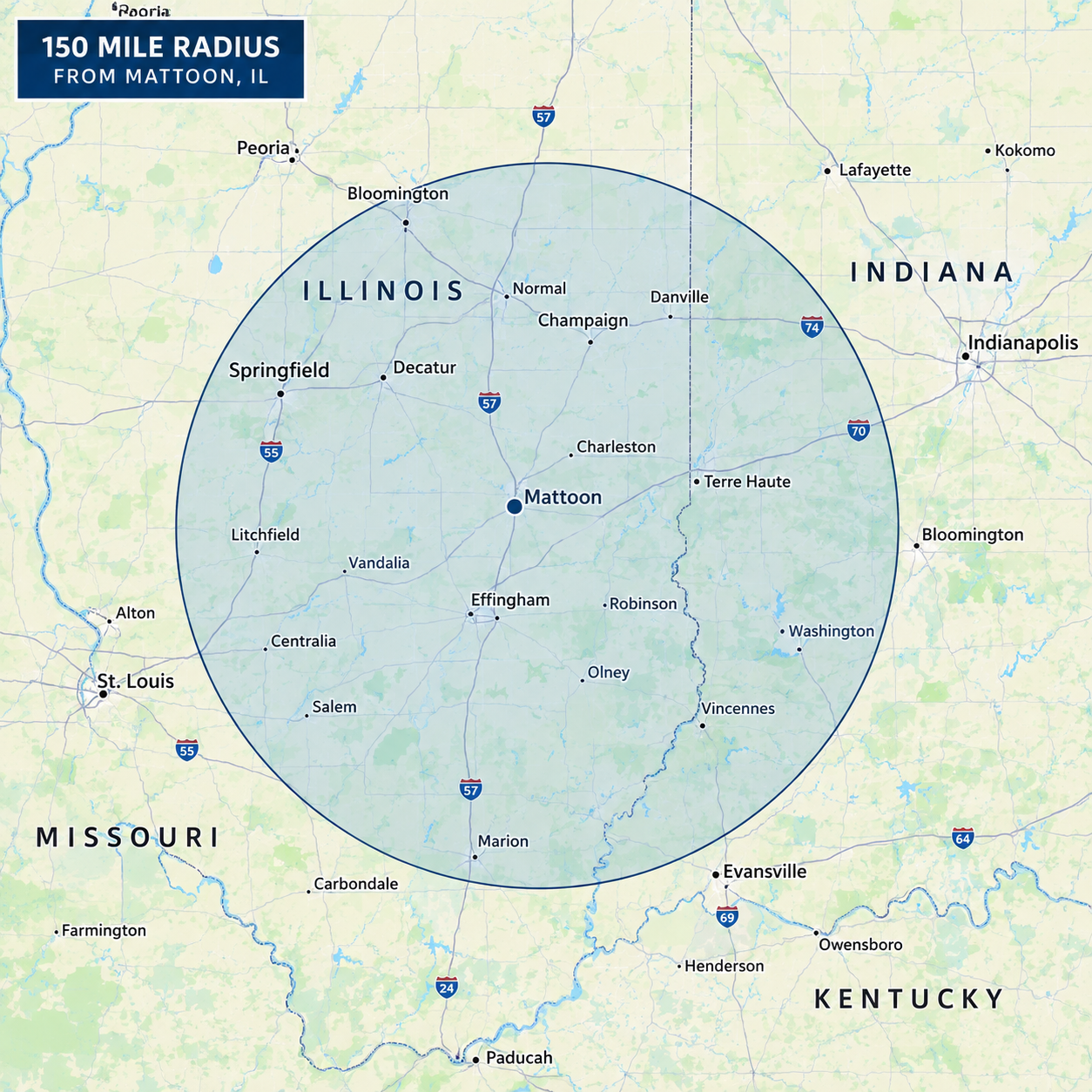
Springfield ZIP codes we serve include 62701, 62702, 62703, 62704, 62707, 62711, and 62712. If you are nearby and do not see your town listed, call us anyway. If it is within our service area — roughly 150 miles from our Mattoon shop — we will come out and quote it.
Springfield Garage Floor FAQs
How much does an epoxy garage floor cost in Springfield, IL?
A professionally installed flake system from ProLine runs $5.75 to $7 per square foot in Springfield. A typical two-car garage (400 to 480 square feet) works out to roughly $2,300 to $3,360. The grind-and-clear option runs $5 to $5.50 per square foot. A $2,500 minimum project charge applies. Your free quote gives you an exact price for your slab — the range depends mostly on the condition of the concrete and the size of the floor.
Is polyaspartic better than epoxy?
For a Springfield garage, yes — and the difference is practical, not just technical. Standard epoxy cures slowly, struggles in cold and damp conditions, and can yellow and peel under sunlight and freeze-thaw cycles. Polyurea and polyaspartic cure fast, bond harder, flex with temperature swings, and resist UV. That is why we can install through the winter and finish most garages in one day. Epoxy is not a bad product. It is just the older technology, and in a climate with 116 sub-freezing days a year, the newer system holds up better.
How long does it take to coat my garage floor?
Most two- and three-car garages are finished in a single day. Larger floors, heavy repairs, or a garage that needs extra prep can take longer, and we will tell you that during the quote — not on the morning of the job.
Can you install a garage floor coating in winter?
Yes. This is one of the main advantages of a polyurea and polyaspartic system over standard epoxy. Epoxy needs warm, dry conditions to cure properly. Polyurea and polyaspartic cure reliably in cold weather, so we coat garages year-round in Springfield, including January and February.
Will a coating fix my cracked garage floor?
It depends on the cracks. Normal shrinkage cracks, settling cracks, and surface pitting are repaired as part of our process — we grind, patch, and then coat over them, and the finished floor looks and performs like new. Structural cracking is different. If the slab is moving because of ground movement — including the old mine workings under parts of Springfield — a coating will not fix that, and we will tell you honestly if that is what we are seeing. Our warranty covers the coating system, not structural movement of the concrete.
What does the 5-year warranty cover?
Our 5-year warranty covers the coating system itself — the materials and the application we provide. It does not cover issues outside our control, including concrete movement, structural cracking, moisture-related problems, impact damage, or improper maintenance. The full warranty terms are on our main garage floor page.
When can I drive on the new floor?
In most cases, you can walk on the floor within hours of installation and drive on it the next day. Polyaspartic top coats cure fast. We will confirm the exact timing for your floor before we leave, because it varies a little with temperature and humidity.
Is a DIY epoxy kit from the hardware store good enough?
A kit will make a floor look better for a while, and for a very light-use garage that might be enough. The difference is preparation and materials. Kits go over the concrete as it is, with a quick acid etch at best, and the epoxy itself is a thin, consumer-grade product. It peels in freeze-thaw cycles — usually within a year or two in Springfield. Our floors start with diamond grinding, real crack repair, and a commercial polyurea base coat that is many times thicker than a kit. That is the whole job, and it is why our floors last.
Get Your Free Quote in Springfield, IL
If your Springfield garage floor is stained, dusty, pitted, or just tired, we can fix it in a day. Call 217-460-1908 or get your free quote online. Tell us about your garage — the size, the condition, and what you want it to look like — and we will give you a firm price and a date. No pressure, no obligation, and no surprise charges after we start.
ProLine Concrete Coatings — serving Springfield, IL and the surrounding Sangamon County area from our shop in Mattoon, IL.