Polyurea vs Epoxy Garage Coating Compared
A garage floor in Central Illinois has a demanding job. It sees hot tires, oil drips, dropped tools, road salt, moisture, and repeated freeze-thaw cycles. When comparing polyurea vs epoxy garage coating, the better choice is not simply the material with the most familiar name. It is the system that is properly matched to the concrete, prepared correctly, and installed to handle how the space is actually used.
Epoxy has been used on garage floors for decades, and a professionally installed epoxy system can still be appropriate in certain interior environments. However, modern polyurea and polyaspartic coating systems often offer meaningful advantages for garages that need faster installation, greater flexibility, and dependable resistance to everyday abuse. The details matter, especially when a coating is expected to last.
Polyurea vs Epoxy Garage Coating: The Core Difference
Epoxy is a two-part coating made by combining resin and hardener. Once mixed, it cures into a hard, protective surface. It is widely known for its adhesion and chemical resistance, which is why it has long been used in garages, workshops, warehouses, and industrial spaces.
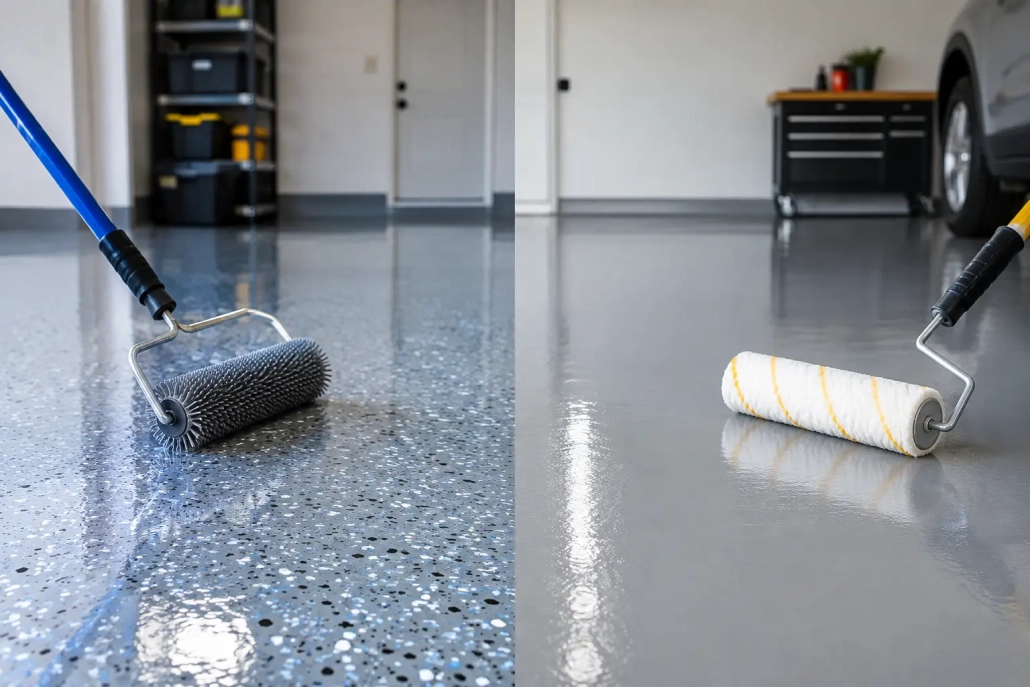
Polyurea is also a high-performance, two-part coating, but it cures differently and has different physical properties. It is generally more flexible than epoxy, allowing it to better accommodate minor concrete movement caused by temperature changes. In a professional garage floor system, polyurea is often used as the base coat, followed by a full broadcast of decorative vinyl flakes and a polyaspartic clear topcoat.
The topcoat is an important part of the comparison. Polyaspartic is a type of polyurea coating formulated for longer working time and strong UV stability. It seals the flake layer, creates the finished appearance, and adds protection against abrasion, stains, and sunlight exposure.
Neither product can overcome poor concrete preparation. A coating is only as dependable as the concrete surface beneath it and the bond created during installation.
Surface Preparation Determines Whether a Coating Lasts
The most common reason garage coatings peel is not necessarily that the product was inferior. It is that the concrete was not properly prepared. Concrete can hold dirt, oil, curing compounds, old sealers, moisture, and weak surface material that prevent a coating from bonding.
Professional installation begins with diamond grinding. This mechanical process removes contaminants and opens the pores of the concrete, leaving a clean profile for the base coat to grip. Acid etching, often included with DIY epoxy kits, does not provide the same level of consistent mechanical preparation and may not remove all surface contamination.
Cracks, pits, and spalled areas should also be evaluated and repaired before coating. A floor coating can improve the appearance of damaged concrete, but it is not a substitute for repairing failed areas first. The repair approach should account for the size, depth, and movement of the damage.
At ProLine Concrete Coatings, preparation is treated as a defined installation stage rather than a quick preliminary task. Grinding, repair, cleanup, and coating application all work together to create a floor system that has a real chance to perform over time.
Cure Time and Installation Schedule
For many homeowners, cure time is one of the clearest differences between epoxy and polyurea systems. Traditional epoxy coatings may require several days before a garage can return to normal use. Temperature and humidity can extend that window, particularly during cooler weather.
Polyurea and polyaspartic systems cure much faster. Under appropriate conditions, a trained crew can prepare the concrete, repair it, apply the base coat, broadcast flakes, and install the protective topcoat in a single day. The floor can commonly return to foot traffic and vehicle use much sooner than a conventional epoxy floor, based on the specific products and site conditions.
Fast cure time is valuable, but it also raises the skill requirement. Installers have less time to work the material once it is mixed. That makes planning, crew coordination, concrete assessment, and proper application technique essential. A quick-curing coating is not automatically a better coating if the installer cannot control the process.
Flexibility Matters in a Midwest Garage
Concrete moves. It expands in heat, contracts in cold, and can develop small cracks over time. Garages in Central Illinois experience seasonal temperature swings, along with water and deicing salts carried in on vehicles during winter.
Epoxy cures very hard, which can be beneficial in some controlled commercial settings. But that hardness can also make it less forgiving when concrete experiences minor movement. Polyurea has more flexibility, helping it accommodate normal slab movement without becoming as brittle.
That does not mean any coating can stop structural cracks from moving or guarantee that every future crack will disappear. Active cracks and substantial slab problems require a different conversation. Still, for sound concrete with typical hairline cracking and seasonal movement, a flexible coating system is often a practical advantage.
Appearance and UV Resistance
A garage floor should be easy to clean, but it should also look finished. Full-flake systems are popular because the vinyl flakes create color variation that helps conceal dust, tire marks, and minor everyday debris better than a single solid-color coating.
Both epoxy and polyurea systems can be paired with decorative flakes. The difference is often in the finish coat. Many standard epoxies can amber or yellow when exposed to UV light. This is especially noticeable near open garage doors, windows, and on floors that receive direct afternoon sun.
A quality polyaspartic topcoat is designed for UV stability. It helps the floor retain its intended color and clear finish while protecting the flake layer from wear. This makes the polyurea base coat and polyaspartic topcoat combination a strong fit not only for garages, but also for sun-exposed patios, walkways, and other concrete surfaces.
Chemical, Salt, and Abrasion Resistance
Garage floors are exposed to more than dirt. Motor oil, gasoline, household chemicals, fertilizer, battery residue, and deicing salt can all stain or damage unprotected concrete. Bare concrete is porous, so liquids can soak in quickly and leave lasting marks.
Epoxy provides good chemical resistance, which remains one of its strengths. Polyurea and polyaspartic systems also offer strong protection when professionally installed as a complete system. The protective topcoat creates a dense, cleanable surface that helps limit staining and makes salt residue easier to remove.
Abrasion resistance matters as well. Tire traffic, rolling toolboxes, lawn equipment, bicycles, and everyday storage can gradually wear down a weak coating. A full-flake system with a protective topcoat provides more than a decorative finish. The flake broadcast builds thickness and adds a protective layer between daily traffic and the concrete below.
No floor coating is maintenance-free. Sweep away abrasive grit, clean spills in a timely manner, and rinse away winter salt buildup. These simple habits help any professionally installed coating maintain its appearance.
Cost Should Be Considered Over the Floor’s Life
A basic DIY epoxy kit may cost less upfront than a professional polyurea system. The price difference reflects more than the coating material. It includes mechanical surface preparation, concrete repair, skilled installation, full flake coverage, and a protective topcoat.
An epoxy floor can also be professionally installed, and it may make sense for a budget-conscious project or a stable indoor area with limited sunlight and predictable use. The best choice depends on the concrete condition, exposure, schedule, and expected traffic.
For a garage that must handle vehicles, salt, changing temperatures, and regular family use, the longer-term value of a professionally installed polyurea and polyaspartic system is often easier to see. Avoiding premature peeling, discoloration, or a second round of installation can make a higher-quality system the more economical decision.
When Epoxy May Still Be the Right Fit
Epoxy is not a poor product by default. It can be a suitable choice for interior spaces with stable temperatures, limited UV exposure, and a schedule that allows for a longer cure period. Certain commercial applications may also call for specialized epoxy systems based on chemical exposure or project specifications.
The problem arises when a low-cost epoxy kit is treated as equivalent to a professionally prepared, multi-layer floor system. Paint rollers, acid etching, and a thin coating applied over unprepared concrete rarely deliver the same bond or durability as diamond grinding and professional application.
The right recommendation should begin with the condition of the slab, not with a one-size-fits-all product pitch.
Choose the System, Not Just the Material
For most active garages, polyurea with a polyaspartic topcoat offers a compelling combination of adhesion, flexibility, fast return to service, UV stability, and cleanability. Epoxy still has its place, but it is often less forgiving of temperature swings, sunlight, and the fast-paced demands of a residential garage.
Before choosing a coating, have the concrete inspected for cracks, moisture concerns, surface contamination, and previous coatings. A clear assessment and a preparation-first installation plan will tell you far more about the likely outcome than a product label alone. A well-prepared floor gives your garage a finish that is ready for the work, weather, and traffic it faces every day.


Leave a Reply
Want to join the discussion?Feel free to contribute!