Why Diamond Grind Concrete Floors Before Coating
A garage floor may look solid, yet its surface can be working against a new coating. Oil residue, old paint, curing compounds, tire wear, hard-troweled concrete, and weak surface paste can all interfere with adhesion. That is why diamond grind concrete floors before coating: the process creates a clean, properly textured concrete surface that gives a professional coating system something sound to hold onto.
For homeowners and facility managers, this step is easy to overlook because it happens before the color and decorative flakes go down. But it is one of the clearest differences between a floor coating built for daily use and a surface-level application that may peel, chip, or wear prematurely.
Why Diamond Grind Concrete Floors Before Coating?
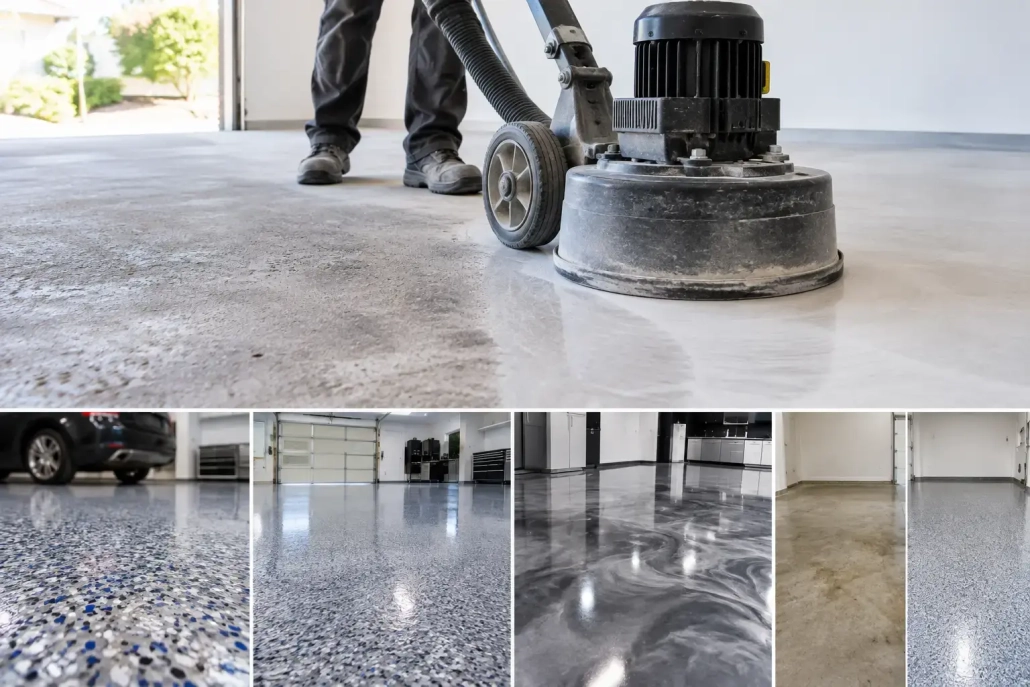
Diamond grinding is a mechanical surface-preparation method. Professional equipment fitted with diamond-segment tooling passes across the concrete, removing contaminants and weak material while opening the concrete’s pores. The goal is not simply to make the slab look cleaner. It is to create the right surface profile for a coating to bond.
Concrete is not perfectly uniform. A new-looking garage slab may have smooth, dense areas created during finishing. An older workshop floor may have absorbed oil, road salt, cleaners, or other contaminants over years of use. A basement can have remnants of previous coatings or patching materials. Coating over those conditions without addressing them leaves the bond dependent on whatever is sitting on top of the concrete.
Grinding gets past that questionable top layer. It produces a consistent, prepared surface so the polyurea base coat can wet into the concrete profile and form a stronger mechanical bond. That preparation supports the entire system above it, including decorative vinyl flakes and the protective polyaspartic topcoat.
Adhesion begins with the concrete surface
A coating can only perform as well as the surface beneath it. If the concrete is dusty, slick, contaminated, or loosely bonded, even a quality coating material is at risk. Common problems such as delamination, peeling, and isolated coating failure often trace back to insufficient preparation rather than the visible finish itself.
Diamond grinding creates microscopic texture across the slab. Think of it as giving the coating a properly prepared foundation rather than asking it to stick to a sealed or polished-looking skin of concrete. The correct profile depends on the coating system and the condition of the slab, which is why trained installers evaluate the surface instead of treating every floor the same way.
This matters especially in garages and commercial spaces. Vehicle traffic, rolling tools, equipment, foot traffic, dropped objects, and routine cleaning all place stress on a floor. A properly bonded coating is better positioned to handle that service than one applied over an unprepared slab.
What Diamond Grinding Removes and Reveals
Grinding is both a preparation step and an assessment tool. As the top layer is removed, the actual condition of the concrete becomes clearer. This gives the installer an opportunity to address issues before they are buried under a finished coating system.
The process can remove or reduce surface contaminants, existing failing coatings, weak concrete paste, minor unevenness, and residue left from construction or previous treatments. It also exposes hairline cracks, small pits, spalls, and damaged areas that may not have been obvious when the floor was dirty or stained.
Those discoveries are useful, not alarming. A crack or pit does not automatically rule out a coating project. It means the area can be evaluated and repaired with materials suited to the condition before the base coat is applied. Skipping that step may leave visible defects in the finished floor or allow damaged sections to continue deteriorating beneath the coating.
Concrete dust is a warning sign, not just a cleaning issue
Some older slabs produce a fine powder when walked on or swept. This is often called dusting, and it can indicate that the concrete surface is weak or breaking down. Applying a coating over loose dust is not a durable solution. The coating needs to be attached to sound concrete, not to a fragile layer that may release later.
Diamond grinding removes that weak surface material where appropriate and prepares the remaining concrete for coating. After grinding, thorough vacuuming and debris removal are equally important. A floor can have the right profile but still be compromised if dust is left behind before application.
Why Acid Etching Is Not the Same Process
Property owners sometimes ask whether acid etching can replace diamond grinding. While acid etching has been used for concrete preparation, it is not the same as mechanical grinding and does not offer the same level of control over the surface.
Acid may react unevenly based on the concrete’s density, contamination, prior sealers, and moisture conditions. It does not reliably remove coatings, oils, adhesive residue, or weak surface layers. It also requires careful handling, neutralization, and rinsing. If residue remains or the concrete is not properly cleaned and dried afterward, the coating bond can suffer.
Mechanical diamond grinding physically removes the surface material and produces a more consistent profile. It also allows installers to see how the slab is responding as they work. For professional polyurea and polyaspartic coating systems, that level of preparation is a practical advantage.
There are exceptions. The right preparation method depends on the existing concrete, access to the space, moisture conditions, and the specified coating system. Still, when the objective is a dependable decorative flake floor or high-performance coated surface, diamond grinding is commonly the preferred starting point.
Diamond Grinding Is Not About Making Concrete Perfectly Smooth
The word “grinding” can make people picture a polished, glossy concrete floor. That is a different process with a different purpose. Before a coating installation, the objective is usually a uniform, open profile, not a polished finish.
The installer selects diamond tooling and works the floor to remove surface barriers without unnecessarily cutting deeply into sound concrete. The result may look slightly lighter, more even, and visibly textured. That texture is valuable because it gives the base coat a prepared surface for adhesion.
A professional crew also manages dust during the process with commercial-grade vacuum equipment. Keeping dust controlled helps protect the work area and supports the final cleaning stage. Preparation is not complete when the grinder stops. The floor must be inspected, vacuumed thoroughly, and checked for repairs or remaining contamination before coating begins.
How Grinding Supports a Full-Broadcast Flake System
A decorative flake floor is a layered system, not a single coating. After preparation and necessary repairs, a polyurea base coat is applied to the concrete. Vinyl flakes are broadcast across the wet base coat until the floor has full coverage. Once the system is ready for the next stage, excess flakes are removed and the surface receives a protective polyaspartic topcoat.
Each layer has a specific job. The base coat establishes the connection to the prepared concrete. The flakes provide color, visual texture, and a finished appearance that helps disguise minor everyday debris. The topcoat helps protect the floor from wear, stains, and UV exposure where the system is specified for those conditions.
If the base coat is not properly bonded because the concrete was poorly prepared, the performance of the layers above it is limited. A beautiful flake blend cannot correct a weak connection at the slab. That is why preparation receives the same attention as the visible portions of the installation.
When Concrete Condition Changes the Plan
Not every floor is ready for coating after a standard grinding pass. Concrete with extensive moisture-related concerns, severe deterioration, heavy oil saturation, failing prior coatings, or significant movement cracks may require additional evaluation and repair. The appropriate recommendation should reflect the floor’s actual condition and intended use.
For example, a residential garage in Central Illinois may need preparation that addresses years of road salt, tire residue, and stored equipment. A retail or showroom floor may call for careful scheduling around business operations and attention to areas exposed to frequent foot traffic. A workshop floor may have localized oil staining or impact damage that needs targeted treatment before the coating system is installed.
The point is not to force every slab into the same process. It is to identify what the concrete needs before a finish is selected. That approach helps property owners make a more informed decision about appearance, maintenance, and expected performance.
The Value of Professional Surface Preparation
Diamond grinders are powerful tools, but successful concrete preparation depends on more than running equipment across the floor. Installers must recognize contaminants, judge concrete condition, select appropriate tooling, control dust, repair defects, and prepare the surface for the specific products being applied.
At ProLine Concrete Coatings, preparation is treated as the start of the floor system, not an optional add-on. That disciplined approach helps create clean, attractive coated floors for garages, basements, patios, commercial spaces, and work areas where bare concrete has become difficult to maintain.
When comparing coating options, ask how the concrete will be prepared and what happens if the crew finds cracks, weak areas, or contamination. The answer says more about the long-term approach than a color sample ever could. A finished floor earns its appearance from the work done before the first coat is applied.

Leave a Reply
Want to join the discussion?Feel free to contribute!